
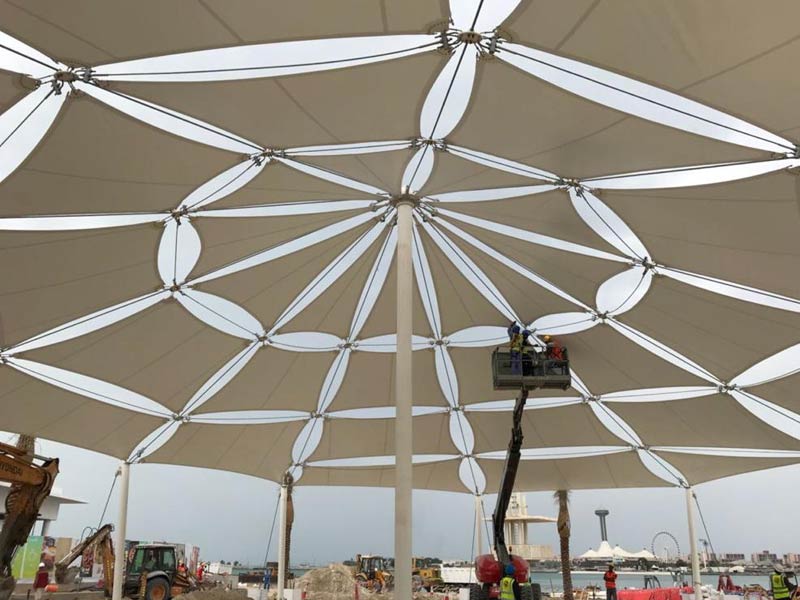
The sun beats down relentlessly on the Arabian Peninsula for most of the year. Finding shade becomes more than just a matter of comfort. It becomes a matter of survival and safety. You see beautiful fabric structures stretching across parking lots, parks, and restaurant patios. These are not just simple pieces of cloth. They represent advanced engineering designed to battle intense solar radiation Tensile Shades Dubai.
We will explore exactly how these structures manage the brutal summer temperatures. You will learn about the materials that make them strong. We will uncover the thermal dynamics that keep the air underneath them cool. Finally, you will understand why investing in Tensile Shades Dubai solutions offers incredible value for homes and businesses. Let us dive into the science and design of modern sun protection.
The Science of Sun Protection
A basic umbrella provides shade. However, the air underneath often remains stiflingly hot. Tensile structures operate on a completely different level. They actively manage heat transfer and light penetration.
Reflecting the Solar Energy
The secret begins with the surface of the fabric. Premium quality shading materials feature specialized coatings. These coatings reflect a massive percentage of solar energy right back into the atmosphere. The heat never even penetrates the fabric. Traditional solid roofs absorb heat and radiate it downward. This reflection creates a massive drop in ambient temperature immediately below the canopy.
Protection Against UV Rays
Ultraviolet rays are extremely hazardous in the Middle Eastern sun. Noting the extent of the damage that can occur to skin and other materials. Damage to skin and other materials can be severe, and extended exposure is not recommended. Modern fabric structures can block 99% of dangerous UV rays. The UV protection provided by the fabric is two-fold. The tight weave acts as a physical barrier, and chemical treatments that are added within the weave during manufacturing enhance protection. Other than the damage caused by the sun, you can sit without having to worry about severe harm being caused by sunburns.
Why Tensile Shades Dubai Projects Succeed
Local climate conditions test the limits of any architectural feature. Summer temperatures regularly exceed forty-five degrees Celsius. Sandstorms whip through the city. Humidity levels spike during late summer. Shading solutions must survive all these factors simultaneously.
- The Magic of Tension
The name itself gives away the primary engineering secret. Engineers stretch the fabric tightly across a rigid framework. This tension gives the structure incredible stability. A loose piece of cloth flaps in the wind and eventually tears apart. A tensioned surface resists wind loads effectively. The wind glides smoothly over the curved shapes. The aerodynamic design prevents the fabric from catching the wind like a sail.
- Advanced Material Selection
Experts rely on two primary materials for serious shading projects. High-density polyethylene offers fantastic breathability. This woven plastic lets hot air escape upward through microscopic gaps. The air circulation naturally cools the space below.
Polyvinyl chloride offers complete waterproofing. Manufacturers coat a strong polyester base with liquid plastic. This creates a solid barrier against both sun and rain. These advanced plastics resist extreme heat without melting or degrading. They also resist the abrasive action of blowing desert sand.
Beyond Basic Shadows: The Real Financial Benefits
Installing these structures requires a financial commitment. However, the return on investment becomes obvious very quickly. Property owners save money in several surprising ways. Buildings soak up heat through direct sunlight on windows and walls. Air conditioning units must work extremely hard to cool these superheated buildings. Placing a large tensile canopy near a building blocks the direct sunlight. The exterior walls remain significantly cooler. Your air conditioning system uses far less electricity to maintain comfortable indoor temperatures. Many businesses report massive reductions in their monthly power bills after installing external shading.
Keeping Your Shades Strong
Proper maintenance ensures your shading investment lasts for decades. The local environment throws dust, sand, and occasional heavy rain at these structures. You must take basic steps to keep them performing perfectly.
- Simple Cleaning Routines
Dust settles on the top of the fabric very quickly in the desert. A thick layer of dirt reduces the reflective properties of the canopy. You should wash the structure with clean water every few months. A gentle spray removes the abrasive sand particles. Do not use harsh chemicals. Strong soaps strip away the UV protective coatings. Regular plain water works best.
- Regular Structural Inspections
Tensioned fabric slowly stretches over many years. Windstorms push and pull the steel cables. You should hire a professional to inspect the structural integrity annually. They will tighten the cables and check the steel joints for rust. Catching a loose fitting early prevents catastrophic failure during a massive winter storm. Proper tension keeps the fabric safe from tearing.
Conclusion
Surviving the intense local climate requires smart engineering and advanced materials. Tensile fabric structures provide the perfect solution for outdoor comfort. They reflect heat and block dangerous radiation. The unique shapes resist heavy winds and naturally cool the air underneath them. You protect your property and lower your cooling costs by blocking the sun effectively. Consider adding a tensioned canopy to your property to reclaim your outdoor spaces during the harsh summer months.
Frequently Asked Questions
How long do tensile fabric structures last in the intense summer heat?
Most premium fabric structures easily last between fifteen and twenty years. Advanced plastic coatings protect the core fibers from solar degradation.
Do these fabric canopies require building permits in the city?
Yes. You must obtain proper approvals from local authorities before installing permanent structures. The government checks the engineering plans to ensure public safety.
Can the fabric catch on fire during extreme heatwaves?
No. Manufacturers treat the materials with strict fire-retardant chemicals. The fabric will melt if exposed to direct flames, but it will not spread the fire.
Will the canopy protect my car from heavy winter rain?
It depends on the chosen material. Solid waterproof fabrics block all rain completely. Breathable mesh fabrics allow fine mist to pass through during heavy storms.